Can women retire at 52? The short answer is yes, but it requires a level of financial discipline and planning that goes well beyond conventional retirement advice. According to the U.S.
Census Bureau's American Community Survey, the average retirement age for women in the United States hovers around 62, which means retiring at 52 puts you a full decade ahead of the curve.
The challenge many women face is not a lack of desire but a lack of a clear, actionable framework for closing a 10-year income gap before Social Security and Medicare eligibility kick in.
This article breaks down exactly what you need to evaluate, the biggest obstacles you will hit, and the practical moves you can make this week to determine whether 52 is a realistic target for your specific situation.
If you have been asking whether can women retire at 52 without running out of money, the five steps below will give you a concrete answer.
1. Understand What Retiring at 52 Actually Costs
The first question to answer is not "can I retire at 52?" but "what will my life actually cost from 52 to 92?" The IRS life expectancy tables used for required minimum distributions assume a woman who reaches age 52 can expect to live another 30-plus years. That means you are planning for a retirement that could last four decades.
When evaluating whether can women retire at 52, the cost side of the equation comes first.
Your biggest financial hurdle is the gap between age 52 and 59½, which is the earliest age you can withdraw from most retirement accounts without a 10% early withdrawal penalty.
The IRS imposes this penalty on distributions from traditional IRAs and 401(k) plans taken before age 59½, with limited exceptions like the Rule of 55 for employer plans or substantially equal periodic payments under IRS Section 72(t). You need a bridge strategy.
A practical starting point is to calculate your annual essential spending, then multiply it by the number of years until you can access penalty-free retirement funds. If your essential costs are $60,000 per year and you retire at 52, you need roughly $450,000 in accessible non-retirement assets just to cover the first seven and a half years.
That figure does not include healthcare, taxes, or inflation.
How to apply this: List every account you own and note the earliest age you can access it without penalty. This single exercise will reveal whether your bridge funding is sufficient or whether 52 is too aggressive.
2. Build a Healthcare Bridge Before Medicare Kicks In
Healthcare is the single most underestimated cost for anyone considering early retirement, and it hits women harder because women statistically use more healthcare services over a lifetime. Medicare eligibility begins at 65, which means you need 13 years of private coverage if you retire at 52.
Any honest analysis of whether can women retire at 52 must start with this healthcare gap.

The Affordable Care Act marketplace is your primary option during this gap. Premiums vary significantly by state, income, and plan tier, but a common scenario is a single woman in her early 50s paying between $400 and $900 per month for a mid-tier silver plan before subsidies.
If you can manage your taxable income during early retirement, you may qualify for premium tax credits that reduce this cost substantially.
You should also investigate Health Savings Accounts (HSAs). If you have an HSA-eligible high-deductible health plan before you retire, you can keep that account and use it tax-free for qualified medical expenses at any age.
Contributions stop once you leave your job, but existing funds continue to grow and can be withdrawn tax-free for medical costs, including many Medicare premiums later.
The IRS confirms that HSA funds used for qualified medical expenses are never taxed, making this one of the most powerful early-retirement healthcare tools available for women asking whether can women retire at 52 on their current savings.
How to apply this: Go to the federal marketplace website and run a quote using your projected retirement income. This takes 10 minutes and gives you a real number to build into your plan.
3. Estimate Your Social Security Benefit at 52 — Not 62 or 67
Many women drastically overestimate what Social Security will provide, especially when retiring early. Your Social Security benefit is calculated based on your highest 35 years of earnings. If you stop working at 52, you may have fewer than 35 years of substantial earnings, which means zero-income years get averaged into your benefit calculation and permanently reduce your monthly check.
The Social Security Administration's official benefit estimator tool lets you model what happens if you stop working early. A woman who earned an average of $70,000 annually for 30 years will receive a meaningfully lower benefit than someone who worked 35 years at the same salary, because those five missing years are counted as zero.
You also cannot claim Social Security until age 62 at the earliest, so retiring at 52 leaves a full decade with no Social Security income at all. This decade-long gap is one of the biggest reasons the question of whether can women retire at 52 is harder than it first appears.
The Social Security Administration states on its official website that "your benefit amount is based on how much you earned during your working career." If you leave the workforce at 52, that career is shorter by definition, and the math reflects it.
You should also know that claiming at 62 locks in a permanently reduced benefit — roughly 25% to 30% less than your full retirement age benefit, depending on your birth year.
How to apply this: Create a "my Social Security" account at ssa.gov and review your current earnings record. Check for missing years and model a stop-work scenario to see your actual projected benefit.
4. Stress-Test Your Portfolio for a 40-Year Horizon
Retiring at 52 means your portfolio must survive longer than the standard 30-year retirement most calculators assume. The traditional 4% safe withdrawal rule was built on a 30-year horizon. Stretching it to 40 years requires a lower initial withdrawal rate, typically in the 3% to 3.5% range depending on your asset allocation and risk tolerance.

This is a critical test for anyone wondering whether can women retire at 52 with confidence.
Sequence-of-returns risk is your biggest enemy. If the market drops 20% in your first two years of retirement and you keep withdrawing, your portfolio may never recover enough to sustain four decades of spending. This is why many early retirees adopt a flexible withdrawal strategy: spend less in down years, more in up years.
Consider a common scenario: a woman with $1.5 million in investable assets who wants $55,000 in annual spending. At a 4% withdrawal rate, she is right at the edge. At 3.5%, she has $52,500 — close but tighter. At 3%, she falls short at $45,000.
The difference between these withdrawal rates is the difference between retiring at 52 with confidence and running out of money at 82.
How to apply this: Use a free retirement calculator that supports variable spending and Monte Carlo simulations. Look for the success probability at different withdrawal rates, not just a single number.
5. Create Income Streams That Do Not Require Full-Time Work
The most reliable way to make retiring at 52 work is to not fully retire in the traditional sense. Many women who leave full-time careers at 52 continue earning through part-time consulting, freelance work, rental income, or dividend-paying investments.
This is sometimes called "semi-retirement" or "financial independence with flexibility." For many, it is the difference between whether can women retire at 52 at all or whether they need to wait a few more years.
The practical advantage is twofold. First, every dollar you earn is a dollar you do not withdraw from your portfolio, which dramatically reduces sequence-of-returns risk. Second, earned income allows you to continue contributing to retirement accounts, including catch-up contributions once you turn 50.
The IRS allows catch-up contributions of $7,500 to 401(k) plans and $1,000 to IRAs for those aged 50 and older, which means you can still build wealth even after leaving a traditional career.
Dividend income deserves specific attention. A portfolio of dividend-paying stocks or funds can generate 2% to 4% in annual yield, which on a $1 million portfolio produces $20,000 to $40,000 per year without selling a single share. This is not enough to live on by itself, but it meaningfully reduces the amount you must withdraw from principal.
How to apply this: Identify one skill or asset you own that could generate $500 to $1,000 per month with minimal time investment. Test it before you leave your job.
Comparison: Early Retirement Income Sources
Before choosing your income mix, it helps to compare your options side by side. Whether can women retire at 52 often depends on combining several of the sources below rather than relying on any single one.
| Income Source | Earliest Access Age | Tax Treatment | Risk Level | Action to Take |
|---|---|---|---|---|
| Taxable brokerage account | Any age | Capital gains tax | Low | Fund this first for your 52-59½ bridge |
| Traditional 401(k)/IRA | 59½ (or 55 with Rule of 55) | Ordinary income tax | Low | Check if your employer plan qualifies for Rule of 55 |
| Roth IRA contributions | Any age | Tax-free | Low | Track your contribution basis carefully |
| Social Security | 62 (reduced) | Partially taxable | None | Model your benefit at 62 vs. 67 |
| HSA for medical expenses | Any age | Tax-free | Low | Max contributions while still employed |
Frequently Asked Questions About can women retire at 52
What is the biggest mistake women make when planning to retire at 52?
The biggest mistake is underestimating healthcare costs and overestimating Social Security income simultaneously. Many women assume Medicare starts earlier than 65 or that Social Security will cover more than it actually does. A specific scenario is a woman who budgets $300 per month for health insurance and later discovers marketplace premiums are double that amount.
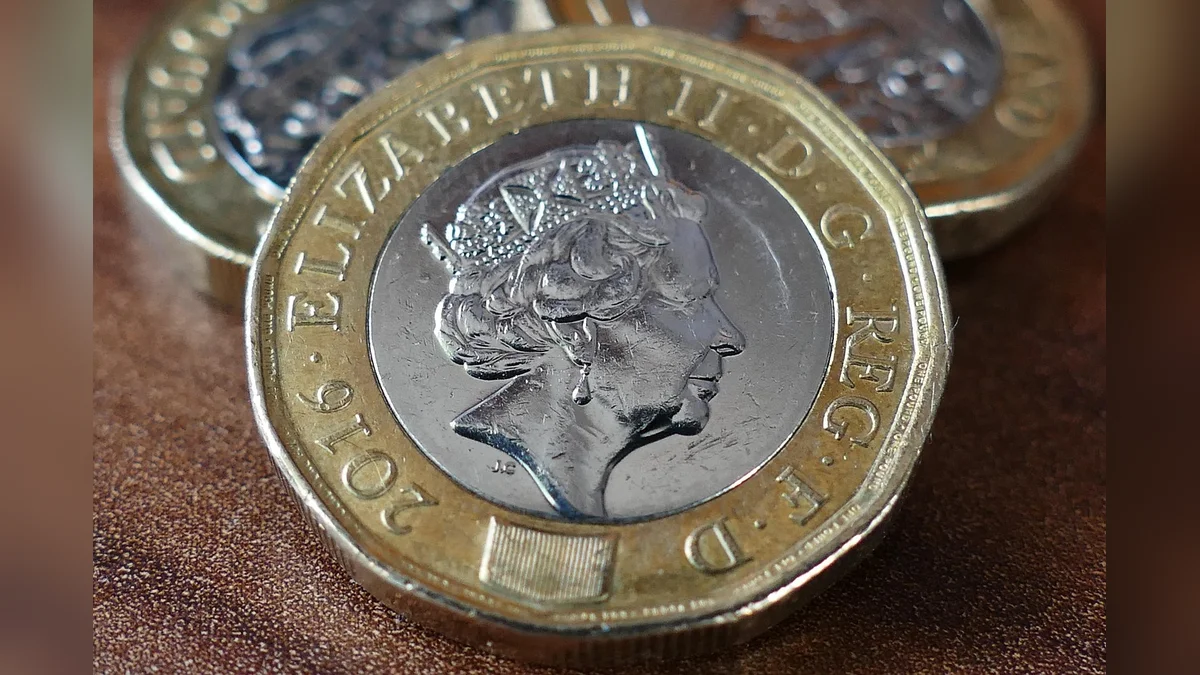
The question of whether can women retire at 52 often comes down to whether the healthcare bridge is fully funded before the decision is made.
How does retiring at 52 affect my Social Security if I have fewer than 35 years of work history?
If you have fewer than 35 years of earnings, the Social Security Administration fills the missing years with zeros when calculating your average indexed monthly earnings. This permanently lowers your benefit. One exception is if you have years of substantial earnings from part-time work after 52, which can replace those zero years.
Understanding whether can women retire at 52 without damaging Social Security requires checking your earnings record for gaps and knowing exactly how many zero years will be included.
Can I access my 401(k) at 52 without paying the 10% penalty?
You can only access a 401(k) penalty-free before 59½ if your employer plan allows the Rule of 55, which applies only to the plan at the job you leave in or after the year you turn 55. Since 52 is before age 55, the Rule of 55 does not apply to you.
The exception is substantially equal periodic payments under IRS Section 72(t), which requires you to take fixed annual withdrawals for at least five years or until age 59½, whichever is longer. This is a real option but requires careful calculation.
If your plan lacks the Rule of 55, the question of whether can women retire at 52 becomes much harder financially.
A key obstacle for anyone asking can women retire at 52 is that 401(k) withdrawals before 59½ usually trigger a 10% penalty.
What net worth do I realistically need to retire at 52 as a single woman?
A realistic figure depends on your spending, but a common benchmark is 25 to 30 times your annual expenses in investable assets. If you spend $50,000 per year, that means $1.25 million to $1.5 million. However, this assumes no other income sources.
If you have rental income or part-time work generating $15,000 annually, your required portfolio drops to roughly $875,000 to $1.05 million. The answer to can women retire at 52 is highly individual and depends on how much of your spending is covered by non-portfolio income.
Is it better to retire at 52 or work a few more years to increase my pension or savings?
Working even two or three additional years has a compounding effect that is difficult to replicate through investment returns alone. Each extra year of work means one less year of portfolio withdrawals, one more year of contributions, and one year closer to penalty-free retirement account access and Medicare.
A specific scenario is a woman who works from 52 to 55 and saves an additional $60,000 while her portfolio grows untouched — that single decision can increase her safe withdrawal amount by several thousand dollars per year for life.
If you are torn on whether can women retire at 52 versus waiting, run both scenarios with real numbers before deciding.
Conclusion
- Retiring at 52 requires a fully funded bridge from 52 to 59½ using taxable accounts, Roth contributions, or the IRS 72(t) exception
- Healthcare is your largest variable cost, with 13 years of private coverage needed before Medicare eligibility at 65
- Social Security benefits will be lower if you stop working early, so model your exact benefit before deciding
- A 40-year retirement demands a lower withdrawal rate — typically 3% to 3.5% rather than the traditional 4%
- Semi-retirement income streams dramatically improve your odds of success and reduce portfolio stress
The question of whether can women retire at 52 is ultimately a math problem with a personal answer. Run your numbers, build your healthcare bridge, and test a flexible income stream before you hand in your notice. Your future self will thank you for the preparation.





